
Home care
About our hospital to home
Coming home after a hospital stay can feel daunting. Our hospital to home service helps your loved one settle back in safely.
We can be there from the day of discharge, helping with mobility, medication, meals and personal care while strength and confidence return.
Because we take a flexible approach, support can be reduced as recovery progresses, or increased if circumstances change.
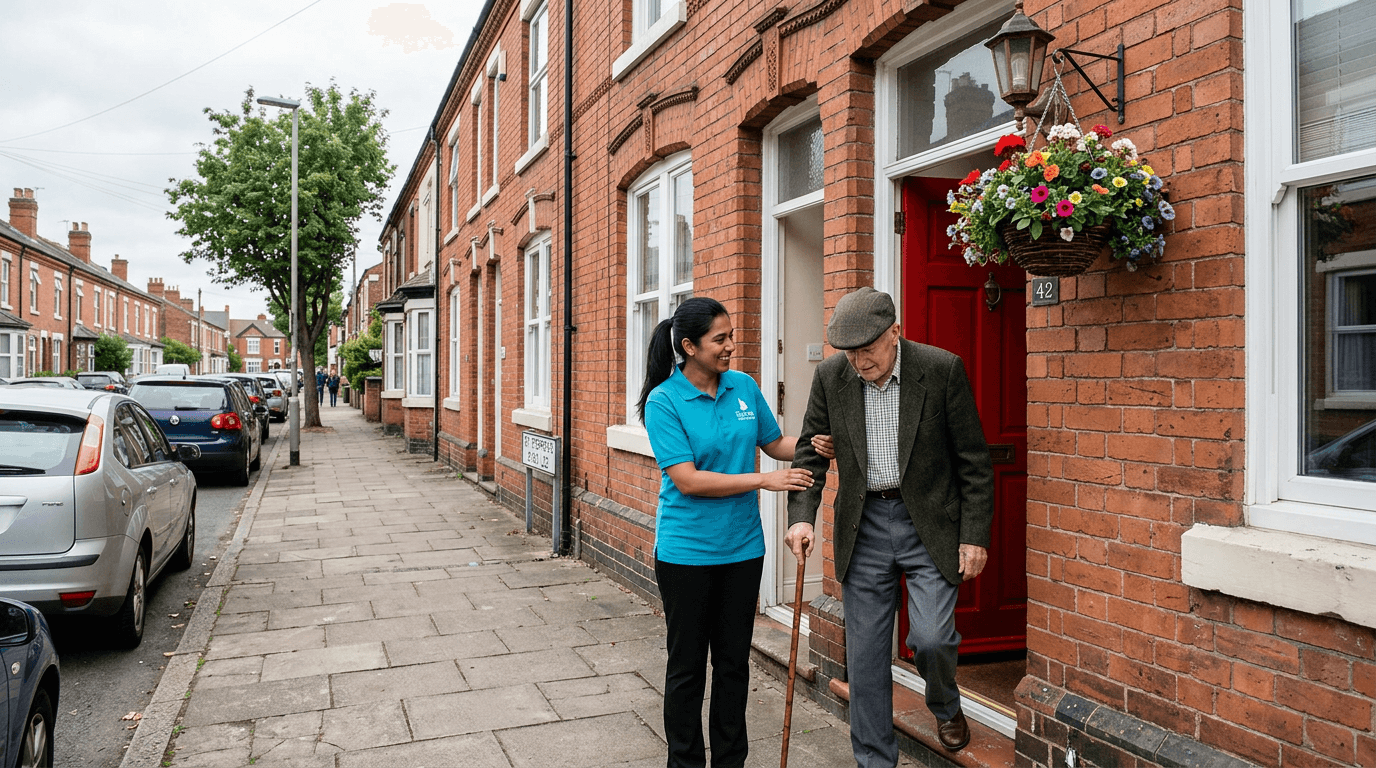
What to sort out before discharge day
The earlier you contact us, the smoother the return, so call as soon as the ward mentions a likely discharge date. Leicester's hospitals include the Royal Infirmary, Leicester General and Glenfield, and wherever your relative is staying, the ward's discharge team will explain what they need at home. We can carry out our care assessment in time for care to begin on the agreed date.
- Ask the ward what help they expect your relative to need with washing, moving and medication
- Check that any equipment being supplied will be in place before they arrive
- Make sure there is food in, the heating is on and the bed is made up
- Give us a key safe code or agree how carers will get in
The first 72 hours back at home
The first three days after a hospital stay are when extra support counts most. People are often weaker and more tired than they expected, the medication may have changed and the stairs feel steeper than before. Our carers help your relative settle, keep to the instructions the hospital has given and tell you promptly if anything worries them.
- Help getting from the car or transport into the house and settled in a chair or bed
- Prompts to take new medication as the discharge paperwork sets out
- Regular meals and drinks while appetite and energy recover
- Unhurried support with washing, dressing and moving around safely
Stepping care down as recovery goes on
Hospital discharge care is usually temporary, and the plan is designed to shrink. We might start with several visits a day and reduce them as your relative takes tasks back, one at a time. If recovery is slower than hoped, the visits can stay as they are or become ongoing care.
- Regular reviews with your relative and the family
- Visits dropped or shortened as confidence comes back
- Carers encourage people to do what they safely can for themselves
- An easy move to longer-term visiting care if it turns out to be needed